
Wet Room Tanking Explained: Why Waterproofing Comes Before Tiling
A tiled wall or floor looks watertight, but tiles themselves aren't what's keeping the water out. The waterproofing underneath is, and in a proper wet room or shower that waterproofing has a name: tanking. It's one of those jobs that's completely invisible once the room's finished, which is exactly why it's also one of the easiest things to skip or rush without anyone noticing until months later. Here's what tanking actually does, and why we won't tile over a floor or wall that hasn't had it done properly first.
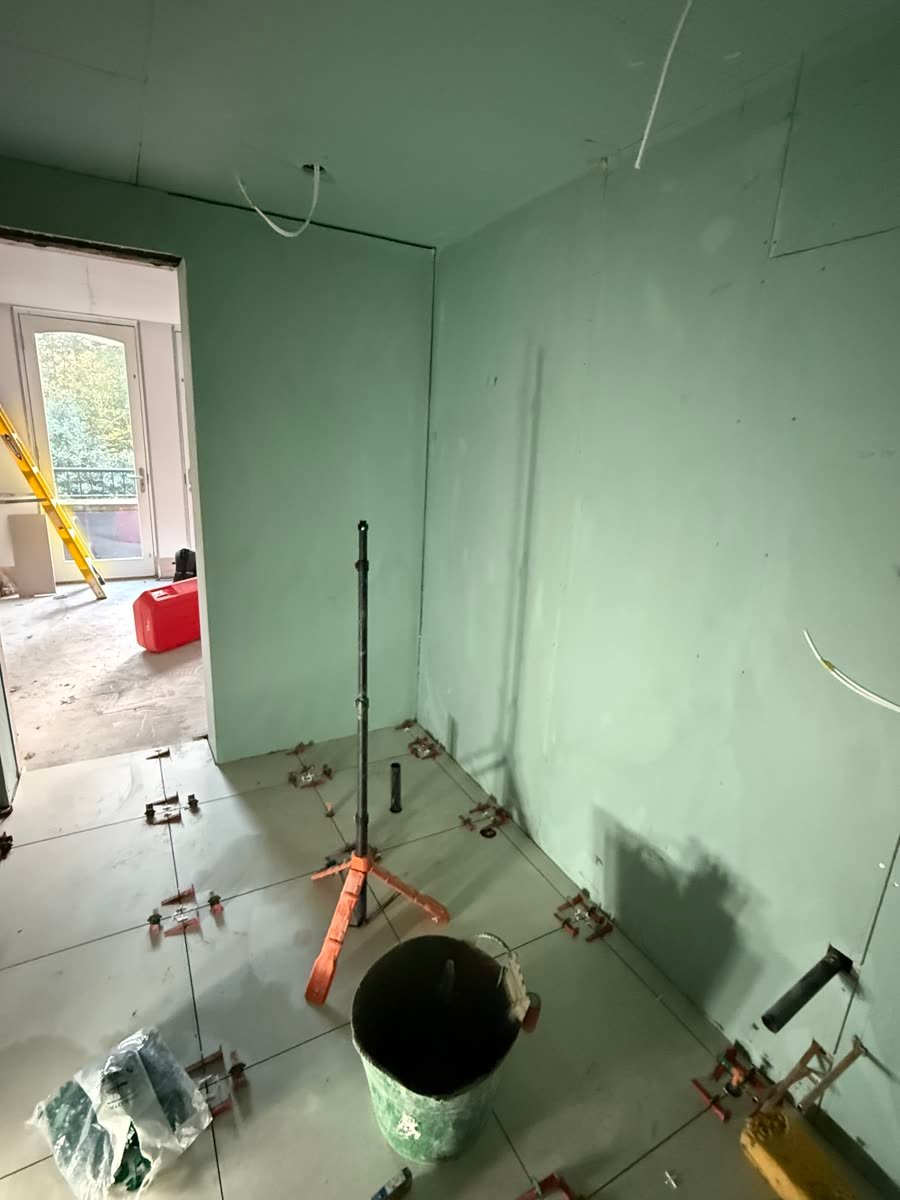
What Tanking Actually Is
Tanking is a waterproof membrane system applied directly to the floor and walls of a wet area before any tiling happens. It's not a product you paint on afterwards, and it's not something the grout or sealant does for you later. It usually involves a waterproofing compound or membrane applied in coats across the floor and up the walls to shower height (or full height in a genuine wet room), paying particular attention to corners, upstands and anywhere a pipe or waste comes through the floor, since those junctions are where a membrane is most likely to fail if it's rushed. Once that's cured and checked, it forms a continuous waterproof layer that sits behind and underneath the tiles, doing the actual job of keeping water inside the shower or wet room and out of the floor structure, the ceiling below, or the wall cavity behind it. The tiles and grout that go on top are the decorative and durable surface. The tanking is the waterproofing.
Why Grout and Tiles Alone Aren't Waterproof
Grout is porous. Even good quality grout, properly applied and sealed, allows a small amount of moisture through over time, and in a shower that gets used daily for years, a small amount over time adds up. Natural stone is porous too, sometimes more so than grout, which is one of the reasons it needs sealing roughly once a year to keep performing as a barrier as well as to protect its finish. Porcelain itself is largely non-porous, but a tiled surface is only as waterproof as its weakest point, and every tiled wall or floor has hundreds of grout lines running through it. None of this means tiling is done badly if water gets through the grout. It means the design assumes something else is doing the actual waterproofing underneath, and that's what tanking is for.
Already sure this is the job you want done properly? Call us directly, no need to read on.
Where Tanking Is Essential, and Where It Matters Less
Tanking is essential in full wet rooms, where the whole floor is a shower area with no tray or step to contain water, and in shower enclosures and bath surrounds where water is in constant, direct contact with the same few square metres of wall and floor day after day. These are the areas where any weakness in the waterproofing will get found, repeatedly, for as long as the room's in use. It matters less, though a lesser degree of waterproofing still applies, in areas of a bathroom that get splashed occasionally rather than soaked constantly, like the wall behind a basin or a floor a few metres from the shower. Where we see problems isn't usually in low-risk areas being under-specified. It's in genuine wet rooms and shower enclosures where tanking was skipped, rushed, or treated as optional to save time, in exactly the areas where it was doing the most work.
The Cost of Skipping or Rushing It
Of everything that can go wrong in a bathroom, a failed or missing tanking job is the most expensive to put right, because by the time it shows up, as a damp patch on a ceiling below, a soft spot in a floor, or mould behind a wall, the tiling covering it usually has to come off to get at it. That means the room's being redone, not repaired. It's also the single most common thing we see go wrong when tiling has been rushed or done badly by someone cutting corners on time rather than the visible finish, because tanking is invisible the moment the first tile goes on top of it. Nobody ever complains about tanking on the day the bathroom's finished. It's not something you can see or show off. The complaints, when they come, arrive later and cost a lot more to fix than doing it properly the first time would have.
If you're planning a new shower, wet room or full bathroom retile, get the waterproofing conversation sorted before you even get to picking tiles. It's the part of the job you'll never see again once it's done, and the part that matters most. See our Bathroom Tiling page for how we approach this on a real job. Or get a free quote if you already know what you need.
Frequently asked
Questions worth answering upfront.
No. Sealant is the visible bead around the edges of a shower tray or bath, dealing with movement and small gaps. Tanking is the waterproof membrane behind and underneath the tiles doing the main job of keeping water out of the structure.
You need waterproofing wherever water is in regular contact with a floor or wall, which is essentially any shower enclosure or bath surround, not just rooms marketed as "wet rooms." The extent varies with the layout, which is something we assess on site.
Generally, no. Tanking sits behind the tiles, so if it's failed, the tiles covering it usually need to come off to access and fix it properly. That's exactly why it's worth getting right the first time.
You often can't tell just by looking, since it's completely hidden once tiling's finished. Signs of a problem tend to be indirect, such as damp patches, a soft floor, or mould in specific spots, which is worth getting checked rather than guessed at.