
Underfloor Heating and Tiles: What Actually Matters
If you're putting underfloor heating into a bathroom or kitchen, tile is genuinely one of the best floor coverings you can choose over it: better than carpet, and often better than wood, for reasons that come down to simple material science rather than fashion. Not every tile handles the heat the same way, though, and the order things happen in matters more than most people realise. Here's what's actually going on underneath your feet.
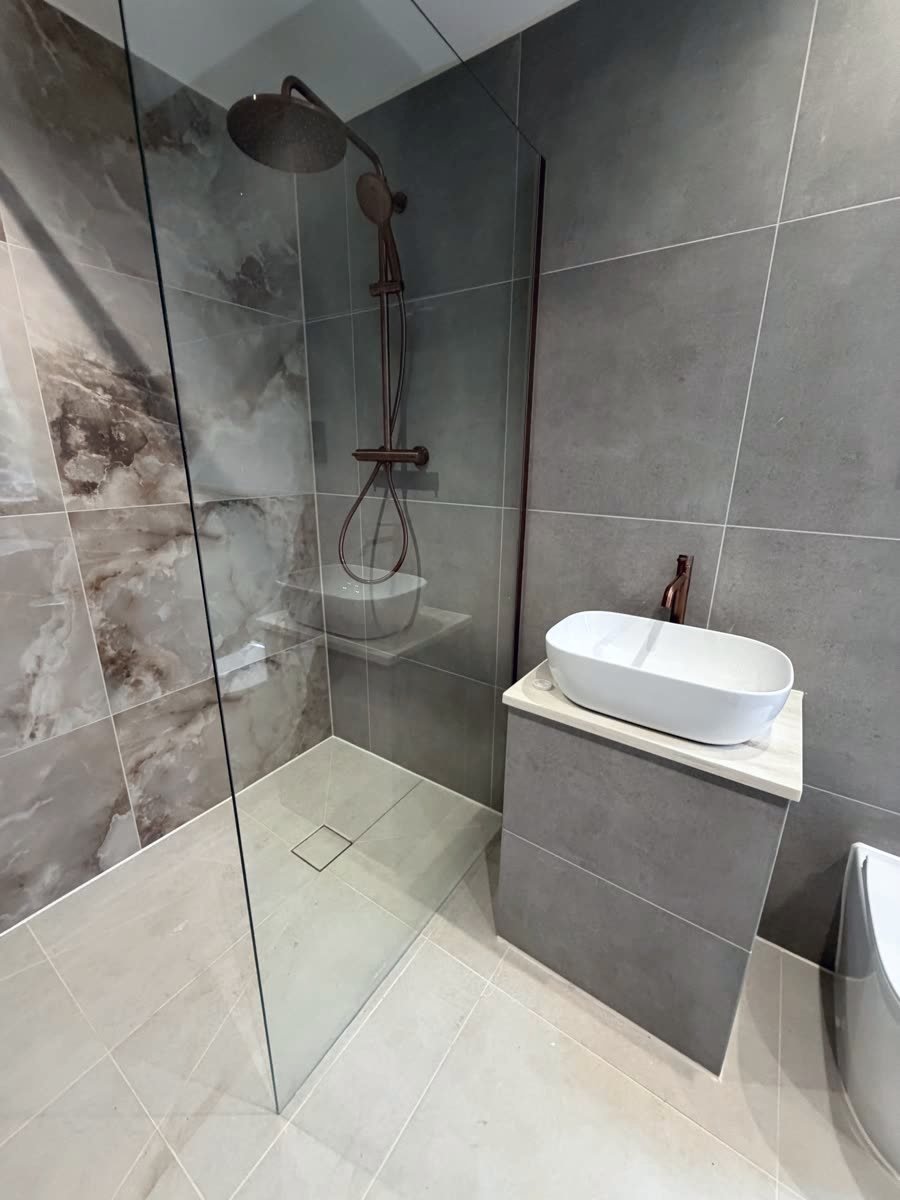
Why Tile Works So Well With Underfloor Heating
Underfloor heating warms a room by heating the floor itself, then letting that heat radiate upward and outward. That only works well if the floor covering actually lets the heat through and holds onto it. Porcelain, ceramic and natural stone all conduct heat efficiently and have decent thermal mass, meaning they absorb warmth from the heating element below and release it steadily into the room rather than insulating against it. Carpet does more or less the opposite, it's designed to trap air and resist heat transfer, which is exactly what you don't want sitting on top of a heating system you're paying to run. Some wood and laminate floors cope reasonably well, but they're more sensitive to temperature swings and can warp or gap over time with repeated heating cycles. Tile doesn't have that problem. It's dimensionally stable, it doesn't mind being warm, and once it's up to temperature it holds that heat far more evenly across the room than most alternatives.
The Order Matters: Heating Goes In Before Tiling
The underfloor heating system itself, the mats, cables or pipework, is almost always installed by a separate trade before tiling starts, usually an electrician or a plumber depending on whether it's an electric or water-based system. That installation, and any testing that needs doing on it, has to be finished and signed off before a tiler gets involved, because tiling adhesive and screed go directly over the top and there's no going back once that's done. We need the system in place, tested and confirmed working, not just physically present, before we start setting anything out. Getting the sequence wrong, or having the heating trade and the tiling happen at the same time to save a week, is how faults get buried under a finished floor where nobody can get to them without lifting tiles.
Already sure this is the job you want done properly? Call us directly, no need to read on.
Not Every Tile Handles Heat Cycling the Same Way
A heated floor doesn't just get warm once and stay there. It heats up and cools down repeatedly, every time the system switches on and off, and every material expands slightly as it warms and contracts slightly as it cools. Porcelain handles this well because it's dense, consistent and dimensionally stable. Natural stone can handle it too, but different stones behave differently under repeated heat cycling, and it's worth remembering stone already needs more looking after generally, it needs sealing roughly once a year and can scratch or etch more easily than porcelain, heating or no heating. Ceramic is a bit more forgiving to work with in tricky layouts but is less impact-resistant than porcelain, which matters less for heat cycling specifically but is still part of choosing the right material for a heated floor that's going to be walked on for years.
Large-Format Tiles Need Extra Care on Heated Floors
Large-format porcelain, up to around 1200x600mm, has become a popular choice for exactly the reason you'd expect: fewer grout lines, a cleaner look, and grout is generally the least heat-tolerant part of any tiled floor. But a big single slab of porcelain expands and contracts as one continuous piece when a heated floor cycles through its heating and cooling pattern, which puts more demand on a genuinely flat, well-prepared subfloor and correct adhesive coverage underneath it than a smaller tile would. Any hollow spots or unevenness under a large-format tile show up more obviously over time on a heated floor than they would on an unheated one, simply because the tile is moving slightly with every heating cycle rather than sitting still. This isn't a reason to avoid large-format tiles over underfloor heating, we fit them over heated floors regularly. It is a reason the prep underneath them matters even more than usual.
If you're planning underfloor heating as part of a bigger renovation, it's worth getting the sequencing and the material choice right from the start rather than working around it later. See our Floor & Wall Tiling page for how we approach this on a real job. Or get a free quote if you already know what you need.
Frequently asked
Questions worth answering upfront.
Most tiles work over underfloor heating, but porcelain and natural stone generally cope with the repeated heat cycling better than some other materials. We'll talk through what suits your specific floor and system on the site visit.
Yes. Whoever installs the heating, usually an electrician or plumber, needs to confirm it's working correctly before we tile over it. Once tiling's done, getting back to the heating element means lifting tiles.
No, we fit large-format porcelain over heated floors regularly. It just means the subfloor prep and adhesive coverage underneath need to be spot on, since a bigger single piece of tile is moving slightly with every heating cycle.
Not the tiling itself, but the heating installation and any testing happens before we start, so it's worth factoring that into your overall renovation timeline rather than treating it as something that happens alongside tiling.