
Small Bathroom Tile Ideas That Actually Make It Feel Bigger
Small bathrooms get a bad reputation, but the tiling choices you make have a bigger effect on how a small room feels than almost anything else in it. Get the format, colour and layout right and a small bathroom can feel calm and open rather than cramped. Get it wrong, too many small tiles, too many grout lines, a hard break between floor and wall, and even a generously sized room can feel busy and boxed in. Here's what genuinely makes a difference, based on what actually works when we're fitting small bathrooms.
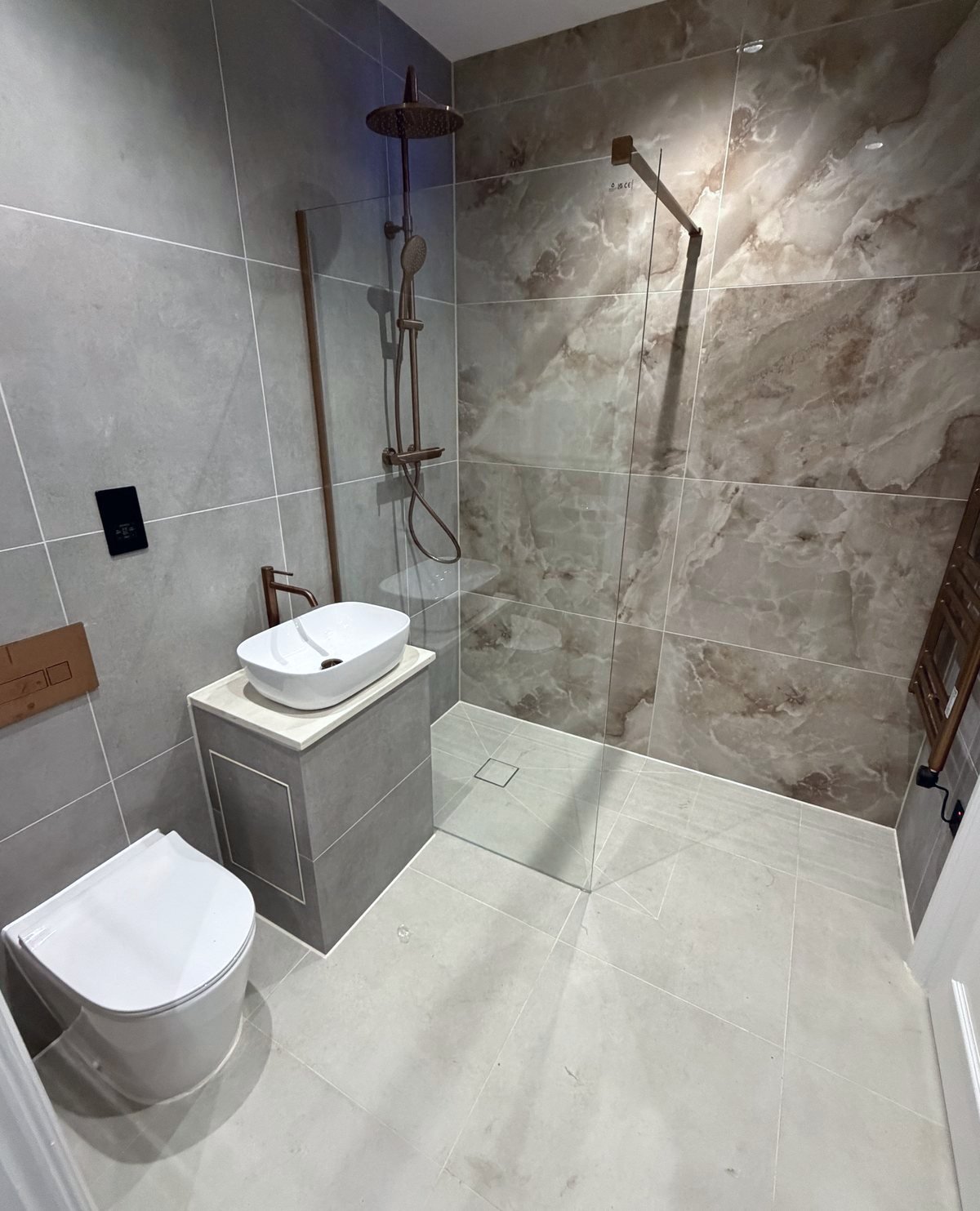
Large-Format Tiles Reduce Visual Clutter
It sounds counterintuitive. Surely bigger tiles in a small room look wrong? In practice, the opposite is true. Every grout line is a visual break, and a small bathroom finished in small tiles ends up with a grid of lines running across every surface, which reads as busy and makes the room feel more cut-up than it actually is. Large-format tiles, even up to 1200x600mm, cut that grid down dramatically. Fewer lines means the eye reads the wall or floor as one continuous surface rather than a patchwork, and that alone makes a small room feel calmer and larger than it is. It does mean a flatter, more even substrate is needed to fit them properly, since a big slab shows up any dip or high spot that a small tile would hide, but that's a fitting consideration rather than a reason to avoid the format.
Colour and How It Reads in a Small Space
Light colours reflect more light around a room, and in a bathroom with limited natural light, which describes most small bathrooms, that matters more than in almost any other room in the house. Pale porcelain, light natural stone, or a soft off-white ceramic will all help a small room feel open rather than enclosed. That doesn't mean small bathrooms have to be bland. A light overall palette with one considered contrast, like a darker grout line or a single feature element, still reads as spacious while giving the room some character. What tends to actually shrink a small bathroom visually isn't dark colour itself, it's lots of contrast and lots of different colours competing for attention in a small footprint.
One Tile, Floor to Wall
Running the same tile across the floor and up the walls, rather than a different tile for each, removes the visual break line where floor meets wall. That junction is one of the places your eye naturally stops and measures a room, and removing it makes the whole space read as one continuous volume rather than a floor and separate walls. This works particularly well in a small wet room or shower area where the floor and wall are already close together. It's a bigger commitment than mixing tiles, since you're choosing one material to do both jobs, but for a genuinely small bathroom it's one of the most effective single changes you can make.
Already sure this is the job you want done properly? Call us directly, no need to read on.
Where Bold Still Works
None of this means a small bathroom has to play it safe. A bold or dark tile on a single feature wall, behind a basin or bath rather than wrapping the whole room, gives a small space a real sense of character without working against it. The trick is containment: one wall, or one recessed area, rather than four walls of the same dark tone, which would genuinely make the room feel smaller. A dark feature wall paired with light tiles everywhere else, and good lighting, reads as a deliberate design choice rather than a room that's shrunk in on itself.
Layout Tricks Worth Considering
Beyond the tile itself, how you lay it changes the read of a room. A diagonal floor layout draws the eye across the widest points of the room rather than straight down its length, which can make a narrow bathroom feel wider. A vertical emphasis on the walls, whether that's a tall narrow tile format or a layout that runs lines upward, draws the eye up and makes a low-ceilinged bathroom feel taller. Neither of these needs an unusual or expensive tile. It's about how a straightforward tile gets set out in the room, which is really a fitting decision as much as a design one.
If you're planning a small bathroom and want to talk through what'll actually work in your space rather than guess from photos online, get in touch for a free site visit. We'll give you honest feedback on format and layout before anything gets ordered. See our Bathroom Tiling page for how we approach this on a real job. Or get a free quote if you already know what you need.
Frequently asked
Questions worth answering upfront.
Yes, and it's usually the opposite of what people expect. Fewer grout lines make a small room feel like one continuous surface rather than a patchwork. The floor or wall underneath just needs to be flat enough to take them properly.
Not necessarily. Dark tiles work well as a contained feature, such as one wall, rather than across the whole room. Used on every surface they can make a small room feel more closed in.
Not inherently. It depends on the tile chosen either way. It does mean committing to one material for both jobs rather than mixing a cheaper wall tile with a different floor tile.
It does. A grout colour close to the tile keeps the surface looking continuous, while a strong contrast grout will emphasise every line and make the room feel busier, even with a large tile format.