
Porcelain vs Ceramic Tiles: What's Actually the Difference
Stand in front of a tile display and porcelain and ceramic can look almost identical: similar sizes, similar finishes, sometimes even printed with the same pattern. The difference isn't in how they look on the shelf. It's in how they're made, how they perform once they're down, and where they're sensible to use. If you're choosing between the two for a bathroom, kitchen or hallway, this is what actually matters.
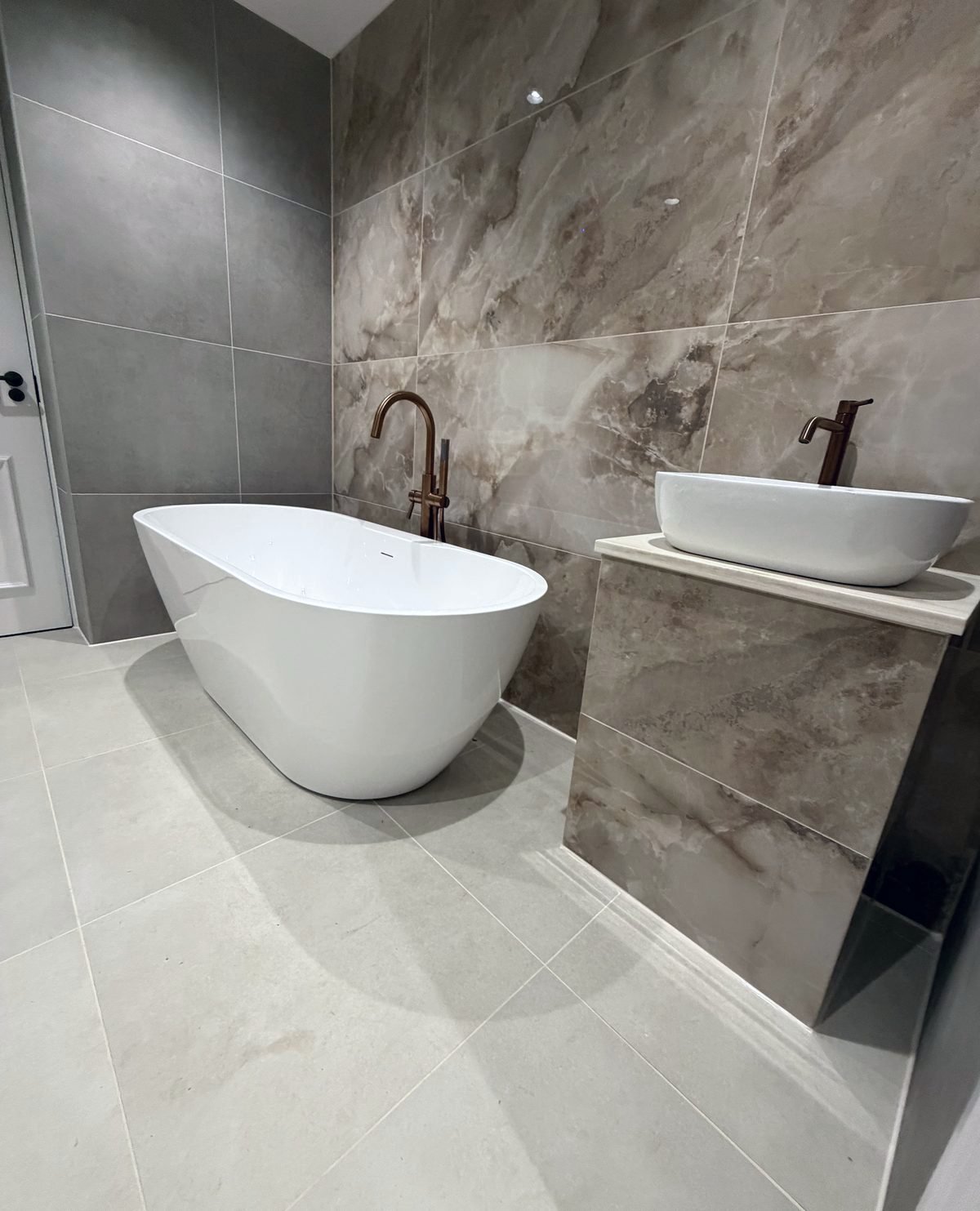
What Porcelain and Ceramic Actually Are
Both are fired clay, but they're not made the same way. Ceramic tiles are made from a coarser, red or white clay body fired at a lower temperature. Porcelain is made from a finer, more refined clay, usually with added sand and feldspar, and it's fired at a much higher temperature and under more pressure. That extra heat and pressure is what changes everything downstream: how dense the tile ends up, how much water it takes on, and how tough it is underfoot. You'll sometimes see "porcelain" used loosely on packaging or by suppliers to describe anything that looks premium. The genuine distinction is in the manufacturing process and the density of the finished tile, not the surface pattern or the price tag alone.
Durability and Water Absorption
This is the difference that actually matters day to day. Porcelain is fired harder and denser, so it absorbs far less water than ceramic. That makes it a genuinely better choice anywhere it's going to get wet repeatedly or sit in a damp environment for long periods: a wet room floor, a shower enclosure, a splashback that gets steam and condensation thrown at it constantly. Ceramic isn't fragile, and used properly, on a wall, or a floor that isn't taking heavy footfall or standing water, it holds up perfectly well for years. But it's more porous, which means it can absorb moisture over time in a way porcelain won't, and it's generally less impact-resistant. Drop something solid on a ceramic floor tile and it's more likely to chip than the same drop on porcelain. That's not a reason to avoid ceramic altogether, it's a reason to put it where its lower toughness doesn't matter.
Cost Differences (and Why Cheaper Isn't Always Ceramic)
As a rule, ceramic tiles cost less to manufacture than porcelain, and that's usually reflected in the tile price itself: porcelain's finer materials and the extra energy needed to fire it at a higher temperature push the base cost up. But the tile price is only part of the picture. Porcelain is a harder, denser material, which means it takes longer to cut cleanly and can be more demanding to fit well, particularly with large-format slabs or anything needing precise edges. That can affect labour time. For context, a full high-end bathroom retile, materials and fitting together, typically comes in around £2,000-2,500 on a job of that scale, and tile choice is one of several things that moves the final number up or down within that range, alongside room size, layout complexity and how much preparation work the existing surfaces need.
Already sure this is the job you want done properly? Call us directly, no need to read on.
Where Each One Actually Belongs
Porcelain is the safer default for floors, wet rooms, shower enclosures and any high-traffic area, because it copes better with both moisture and daily wear. Ceramic is a legitimate, sensible choice for walls: bathroom walls, kitchen splashbacks that aren't getting serious impact, and any vertical surface where water absorption and foot traffic aren't in play. It's also genuinely easier to cut into detailed patterns and shapes, which matters if you're doing anything decorative, a feature wall, or intricate border work. Mosaic work in particular often uses ceramic for exactly this reason. The mistake to avoid is putting ceramic somewhere it'll take a battering: a busy kitchen floor, a wet room floor, anywhere heavy or sharp objects regularly get dropped. It'll usually be fine for a while. It's the years three, four and five where the difference shows up.
Maintenance Differences
Porcelain doesn't need sealing, full stop. Its low porosity means there's nothing for a sealant to protect against in normal use, and that's one less job for you long-term, just clean it as you would any hard floor. Ceramic doesn't strictly need sealing either in most domestic settings, though the grout around it does benefit from being kept in good condition, the same as with any tiled surface. Where ceramic needs more thought is in areas with constant moisture, where its higher absorption means water has more opportunity to get in around edges and joints if the tanking and grouting underneath aren't done properly, which is as much about the installation as the tile itself.
If you're weighing up porcelain against ceramic for a specific room, it usually comes down to what that room actually has to cope with day to day, not which tile looks nicer in a showroom. We fit both, along with natural stone and mosaic, across bathrooms and kitchens throughout Wilmslow, Alderley Edge and Greater Manchester, and we're happy to talk through which makes sense for your space before you commit to anything. See our Bathroom Tiling page for how we approach this on a real job. Or get a free quote if you already know what you need.
Frequently asked
Questions worth answering upfront.
You can, but it's not the ideal choice for a floor that's regularly wet or walked on with bare, wet feet, porcelain is the more sensible option there because of its lower water absorption and better impact resistance. Ceramic works better on bathroom walls.
Generally yes, at the tile level, because of the materials and firing process involved. But the overall cost of a job depends on far more than the tile price, room size, layout, prep work and fitting complexity all factor in, so the gap isn't always as large as people expect once it's all added up.
Yes, and it's a sensible way to work in some rooms, porcelain on the floor where durability and water resistance matter most, ceramic on the walls where you might want more design flexibility or a specific pattern. It's a common combination in bathrooms.
No. Porcelain's density means it doesn't take on water the way natural stone does, so there's no sealing required. That's one of the reasons it's popular for low-maintenance bathrooms and kitchens.