
How to Look After Natural Stone Tiles: Sealing and Everyday Care
Marble, travertine, limestone and granite all look brilliant in a bathroom or kitchen, but they're not maintenance-free in the way porcelain is, and a lot of the damage we see on stone floors comes down to people treating it like any other tile. Natural stone is a genuinely different material with different needs, and getting the basics right, sealing, the right cleaning products, and knowing what to watch for, makes a real difference to how it looks in five or ten years' time.
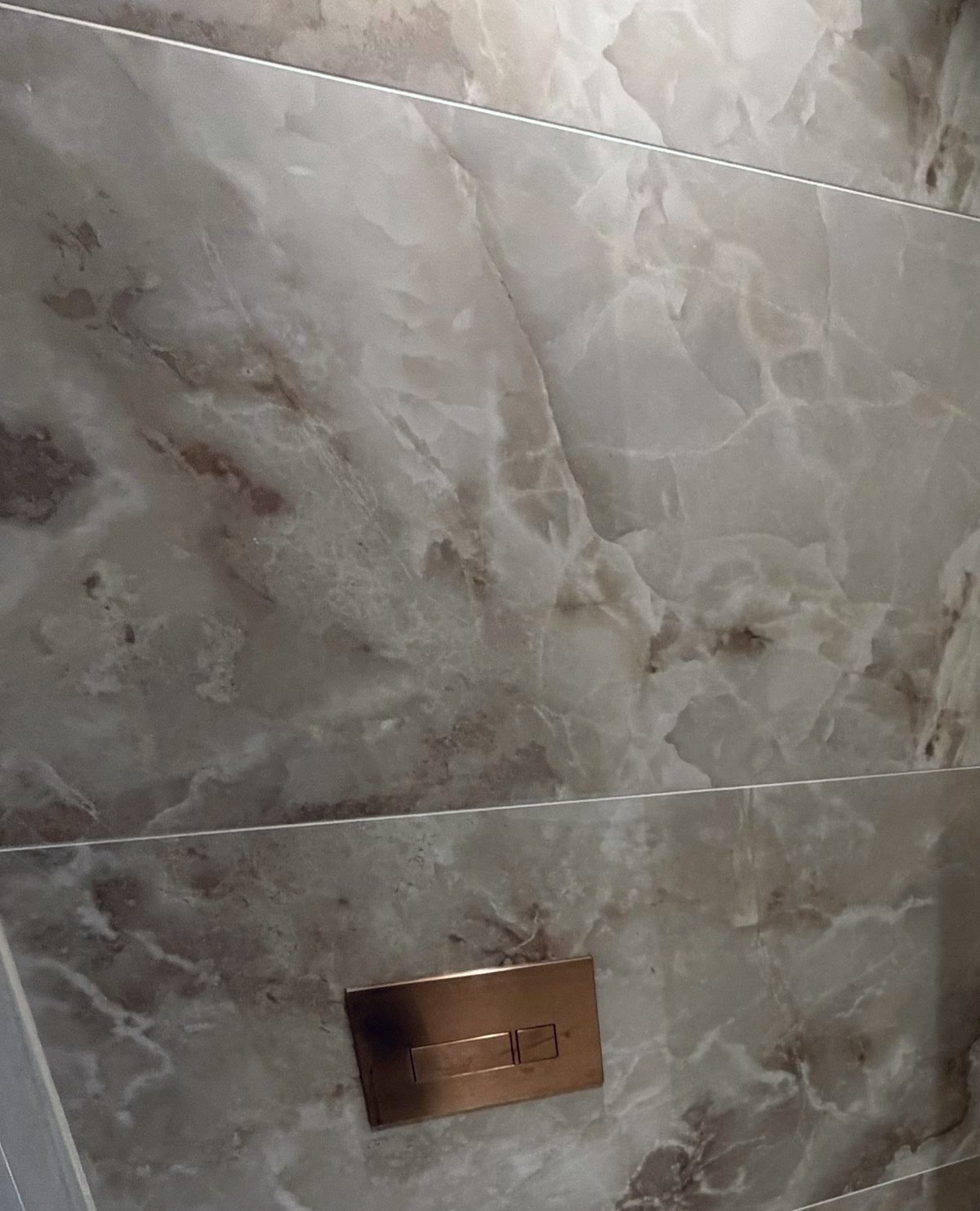
Why Natural Stone Needs Sealing (and Porcelain Doesn't)
The difference comes down to how porous the material actually is. Porcelain is manufactured to be extremely dense and consistent, so water and liquids essentially sit on the surface rather than soaking in, which is why it doesn't need sealing and is generally easier to maintain long-term. Natural stone is a genuinely more porous material, formed naturally rather than manufactured to a fixed density, and without a sealer it will absorb spills, moisture and staining agents into the surface rather than letting them sit on top. Sealing works by filling those pores so liquids bead on the surface for long enough to be wiped away instead of soaking in. It doesn't make stone waterproof or stain-proof forever, but it buys you the time and protection that unsealed stone simply doesn't have, which is exactly why porcelain and natural stone need to be thought about differently even when they're used in the same room.
How Often You Actually Need to Reseal
As a general rule, natural stone needs resealing roughly once a year, but that's a starting point rather than a fixed rule for every floor. A shower floor or busy kitchen floor sees far more water and foot traffic than a low-use guest bathroom, so it can wear through its seal faster. The type of stone matters too: some stones are naturally more porous than others, so a travertine or limestone floor may need more frequent attention than a denser granite surface. Rather than resealing on a fixed date regardless of condition, it's more useful to actually check the surface (see the water test below) and reseal when it needs it, which might be sooner or later than a year depending on how the floor's actually being used.
What Actually Damages Stone
The two biggest causes of damage are acidic products and standing water. Anything acidic, lemon juice, vinegar-based cleaning sprays, some generic bathroom and kitchen cleaners, can etch the surface of stone like marble and limestone, leaving a dull mark that no amount of scrubbing will polish out, because it's a chemical reaction with the stone itself rather than surface dirt. This is a genuine risk in kitchens especially, where citrus and vinegar are commonly used near worktops and splashbacks. Standing water is the other issue: leaving water pooled on stone, whether that's a wet bath mat left in place too long or a leak that's gone unnoticed, gives it far more time to work into the surface than a quick spill that's wiped up. Natural stone is also inherently softer than porcelain, so it's more prone to scratching and general wear from grit, sand or abrasive cleaning pads, particularly on floors.
Already sure this is the job you want done properly? Call us directly, no need to read on.
Safe Everyday Cleaning
The safest approach for day-to-day cleaning is a pH-neutral cleaner made for stone, rather than reaching for whatever's under the sink. Generic bathroom and kitchen sprays are very often formulated to be mildly acidic or alkaline because that's what works well on grout and limescale, but that's the opposite of what you want on sealed stone. A soft cloth or mop rather than an abrasive scourer avoids adding fine scratches, and spills are best wiped up promptly rather than left to sit, sealed surface or not.
Signs Your Stone Needs Resealing
The simplest practical test is genuinely useful: pour a small amount of water onto the stone and watch what happens. On a well-sealed surface, the water will bead up and sit on top for a while. If it soaks in and darkens the stone within a minute or two, the seal has worn through in that spot and it's time to reseal before it becomes a staining problem rather than just a maintenance one. Checking a few different areas, including higher-traffic spots, gives a more honest picture than checking just one corner.
Natural stone is one of the most-used materials in the high-end bathrooms we fit, and getting the sealing and aftercare right from day one makes a real difference to how it holds up. If you're planning a stone bathroom floor or walls and want to know what maintenance you're signing up for before you commit to a material, it's worth a read before you decide. See our Bathroom Tiling page for how we approach this on a real job. Or get a free quote if you already know what you need.
Frequently asked
Questions worth answering upfront.
Marble, travertine, limestone and granite all benefit from sealing because they're all more porous than porcelain, though the exact porosity varies by stone type and even by batch. It's a fair assumption that if it's natural stone, it needs sealing rather than assuming any particular stone is the exception.
Many stone sealers are designed for straightforward application, but getting an even coverage and knowing when a floor actually needs it, rather than resealing too early or too late, is where experience helps. If you're not confident, it's worth asking whoever fitted the stone what they'd recommend for your specific surface.
It's both. Cosmetically, unsealed stone stains and dulls faster, but it also means moisture can work into the tile itself over time, which in a wet area like a shower is a genuine long-term issue rather than just an appearance one.
It depends on how much upkeep you're willing to do. Stone needs more ongoing attention than porcelain, but for a lot of people the look is worth an annual reseal and being a bit more careful with cleaning products. If low maintenance is the priority, porcelain is worth considering instead.