
Large-Format Tiles: The Pros, the Cons, and When They're Worth It
Large-format tiles have become the default look a lot of people ask for, and there's good reason: fewer grout lines, a cleaner finish, and a genuinely modern feel in a bathroom or kitchen. They're not automatically the right choice for every room, though, and the trade-offs matter as much as the benefits. Here's the honest version.
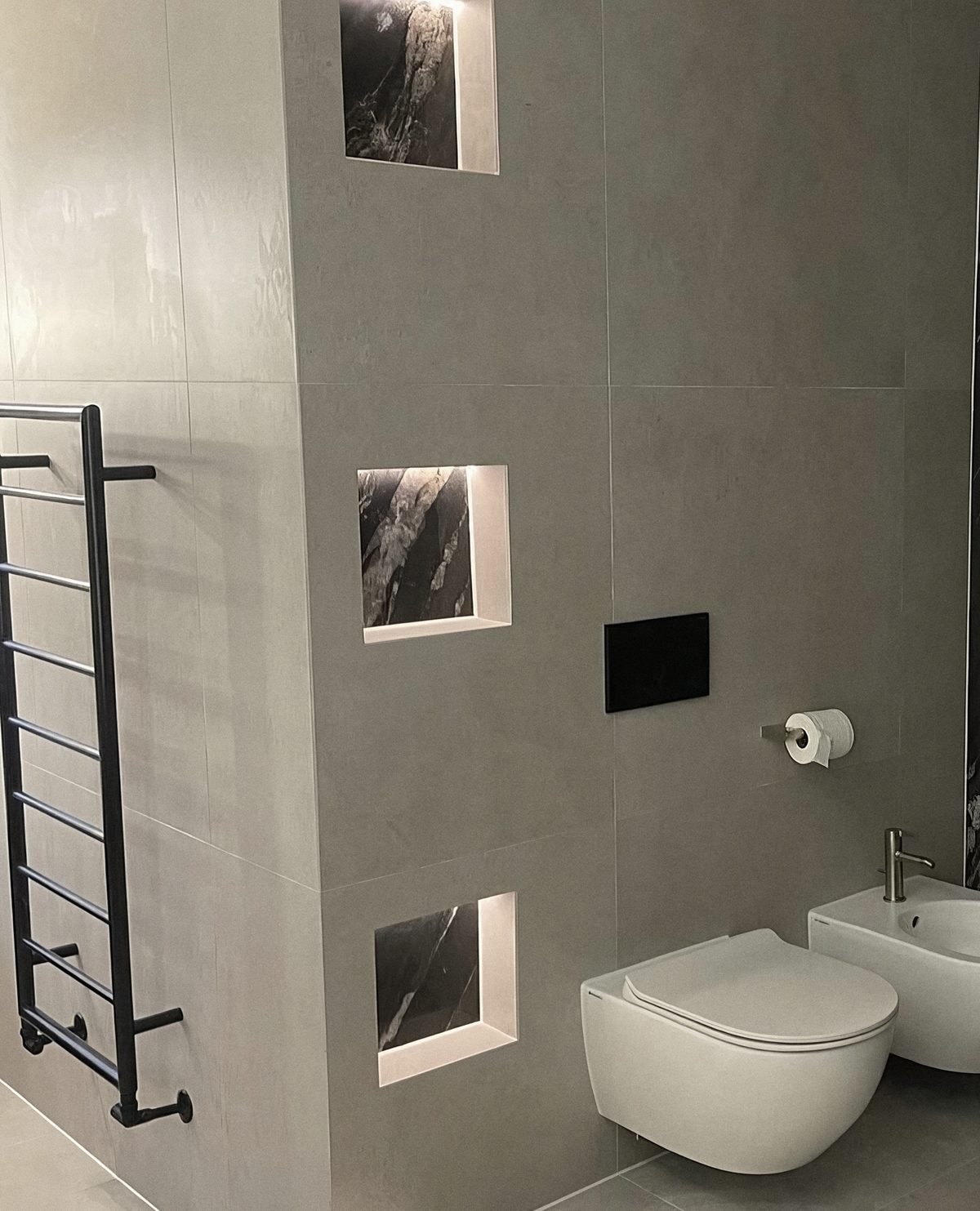
What Actually Counts as Large Format
"Large format" is a moving target, it's really just any tile noticeably bigger than the small and mid-size tiles most people picture when they think "bathroom tile." At the upper end, we regularly fit large-format porcelain slabs up to 1200x600mm, which gives entire walls or floors covered in just a handful of pieces rather than dozens of smaller ones. The material matters as much as the size. Large-format work is almost always done in porcelain rather than ceramic or natural stone, because porcelain can be manufactured as a genuinely flat, rigid slab at that size without the risk of warping or cracking that a less dense material would carry. That's why you'll see far more large-format porcelain on the market than large-format ceramic.
The Genuine Benefits
Fewer grout lines is the headline benefit, and it's not just cosmetic. Grout lines are where dirt, grease and grime collect, and where scrubbing does the least good over time, fewer of them means less maintenance, not just a cleaner-looking wall on day one. A shower enclosure done in large-format porcelain can look genuinely close to a single seamless surface. The visual effect is real too. Large tiles make a small bathroom feel bigger, because the eye isn't tracking a grid of grout lines breaking the space up. And because there's less grout overall, everyday cleaning is faster, wiping down a large flat surface takes less time than working grout lines with a small brush across the same area.
Already sure this is the job you want done properly? Call us directly, no need to read on.
The Genuine Trade-offs
This is the part that gets glossed over. Large-format tiles need a genuinely flat, well-prepared subfloor or wall to sit on, far flatter than smaller tiles ever demanded, because a big rigid slab can't flex to accommodate dips or high spots the way smaller tiles can absorb across more grout joints. If the substrate isn't properly prepared, you risk lippage (edges sitting proud of each other) or, in worse cases, cracking. They're also considerably harder to cut around obstacles, pipework, sockets, awkward corners, because there's less room for error on a big slab and a bad cut is far more visible and far more expensive to redo than the same mistake on a small tile. And they're physically heavy and awkward to handle, particularly at the top end of the size range, which means fitting genuinely needs a fitter experienced specifically with large-format work, not just tiling generally.
When a Smaller Tile Is Actually the Better Choice
Rooms with a lot of pipework, fittings, or awkward angles, a small, oddly-shaped en-suite, a utility area packed with services, often suit a smaller tile better, simply because there's less large, uncut slab to fit around every obstacle and less risk of an expensive mistake on a cut that has nowhere to hide. Smaller tiles are also more forgiving if the substrate underneath isn't perfectly flat, since more, smaller pieces absorb minor variation better than fewer, bigger ones. Budget is a factor too, in an honest sense, large-format porcelain and the more specialist fitting it needs generally cost more than a straightforward smaller-tile job of the same size, so if the room doesn't particularly benefit from the large-format look, a smaller tile can be the more sensible spend. And if you actually want a busier, more textured look, mosaic, pattern work, herringbone, large format isn't the right tool for that anyway; it's a different aesthetic entirely.
Whether large format is right for your room comes down to the shape of the space, the condition of what's underneath, and what look you're actually after, not just what's trending. We fit large-format porcelain up to 1200x600mm across bathrooms and kitchens in Wilmslow, Manchester and the surrounding areas, and we'll tell you honestly if a smaller tile makes more sense for your specific room. See our Floor & Wall Tiling page for how we approach this on a real job. Or get a free quote if you already know what you need.
Frequently asked
Questions worth answering upfront.
Yes, genuinely, a big rigid slab can't flex over dips and high spots the way smaller tiles can across more joints, so the subfloor or wall needs to be properly prepared beforehand to avoid lippage or cracking.
Yes. There's less room for error on a large slab, and a bad cut is far more visible and costly to redo than the same mistake on a small tile, so obstacles need careful planning before cutting starts.
Mostly, yes. Porcelain can be manufactured as a flat, rigid slab at large sizes without the warping risk a less dense material would carry, which is why you see far more large-format porcelain than large-format ceramic or stone.
Generally yes, both because the tiles themselves cost more and because handling and cutting them well needs more specialist experience. Whether that's worth it depends on the room and the look you actually want.