
Kitchen Splashback Ideas That Actually Hold Up to Daily Use
A kitchen splashback gets a harder life than almost any other tiled surface in the house. It's hit with steam, splashing oil, hot pan bottoms and constant wiping down, often several times a day for years on end. Plenty of splashback ideas look brilliant in a photo and turn out to be a headache in year two. Here's what actually holds up, and why.
Why a Splashback Takes More Punishment Than You'd Think
A bathroom wall gets wet occasionally and dries out. A kitchen splashback behind a hob gets heat radiating off it every time you cook, grease thrown up from frying, water splashed from the sink, and then gets scrubbed or wiped down more often than any other tiled surface in the house. It's also usually the most visible tiled area in the room, right at eye level, so any wear shows immediately. That combination of heat, grease and repeated cleaning is why the material and grout choice behind a splashback matters more than it might for, say, a bedroom en-suite wall. A tile that looks fine in a shower enclosure can grout-stain or dull faster behind a hob if it's not suited to the job.
Material Options and the Real Trade-offs
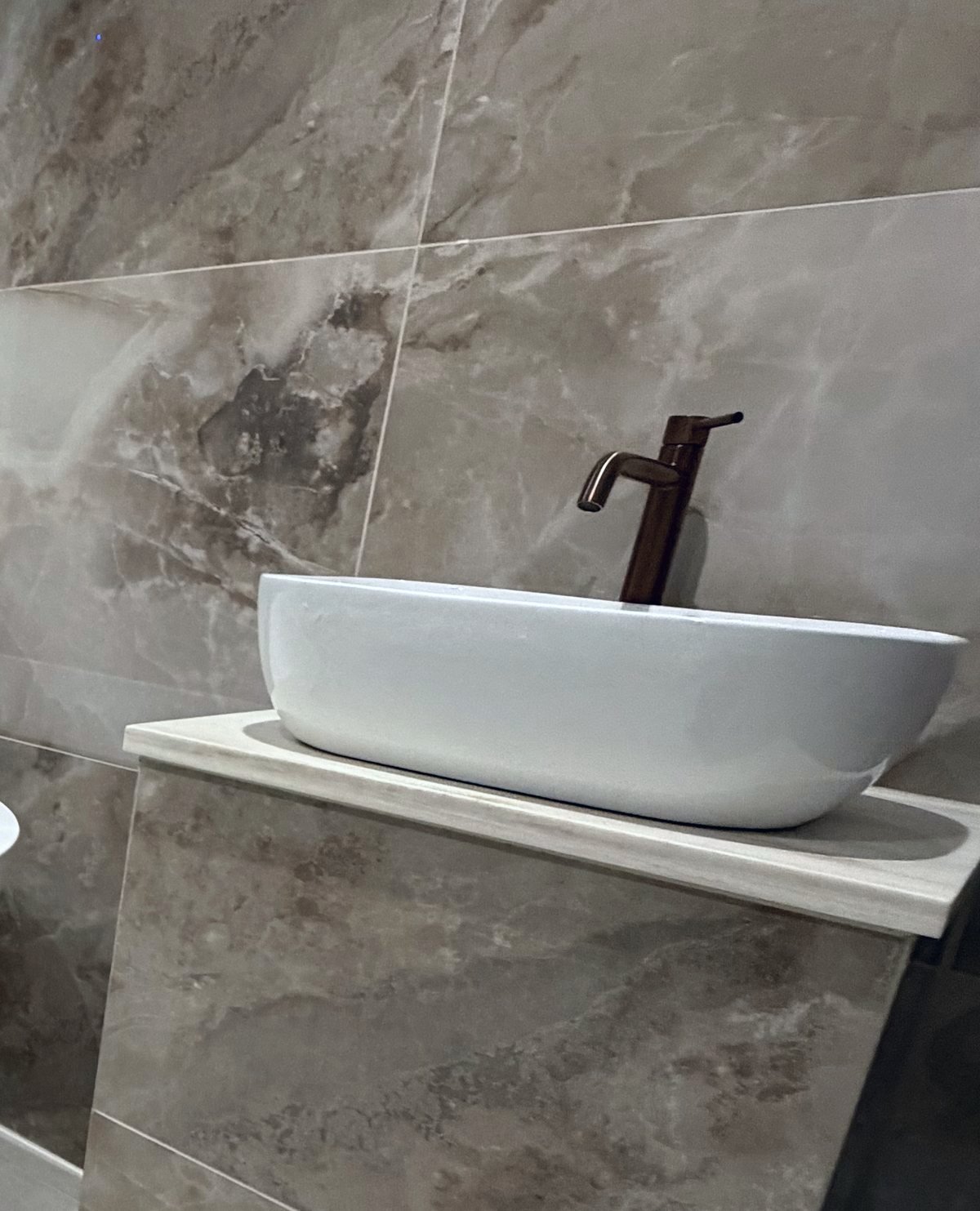
Porcelain is the most practical option for most kitchens. It doesn't absorb grease or moisture the way more porous materials can, it doesn't need sealing, and it wipes clean without much effort. It also comes in finishes that mimic stone or concrete if you want that look without the maintenance that comes with the real thing. Ceramic works well too, particularly if you want to bring in a pattern, a colour, or something more decorative, it's easier to cut into detailed shapes, so it suits printed designs, metro-tile herringbone layouts or a feature strip. Natural stone, marble, travertine, limestone, gives a splashback a genuinely different, higher-end look, especially matched to a stone worktop. The trade-off is real maintenance: it needs sealing roughly once a year to keep performing, and it's more prone to scratching and etching than porcelain, which matters right next to a hob where acidic splashes are a daily reality. Some homeowners look at glass as another splashback option entirely, since it gives a completely seamless, grout-free surface, though that's a different product and installation process from tiling.
Already sure this is the job you want done properly? Call us directly, no need to read on.
Large-Format vs Smaller Tile Look
A large-format porcelain splashback, a single slab or as few pieces as possible behind the hob, gives you a clean, almost seamless surface with the fewest grout lines possible. Less grout means less cleaning, because grout lines are exactly where grease and grime like to sit and where scrubbing does the least good over time. Smaller format tiles, metro, mosaic, hexagons, bring in more visual texture and more grout lines, which means more regular cleaning to keep the grout looking sharp, particularly directly behind the hob. That's not a reason to avoid them; a lot of kitchens genuinely suit that busier look, and grout can be maintained. It's just a trade-off worth being honest about before you commit, especially if low maintenance is the priority over pattern.
Cut-Outs Around Sockets and Extractors
Every kitchen splashback has to work around something, sockets, a switch, an extractor duct, sometimes a boiler flue. Getting these cut-outs right is one of those details that separates a splashback that looks properly finished from one that looks like an afterthought. The cuts need to be precise enough that socket plates and extractor housings sit flush with no gaps, and symmetrical enough that they don't throw off the visual balance of the whole wall, particularly with a large-format slab where there's nowhere to hide a bad cut. This is more demanding with large-format tiles, since a badly placed cut on a big slab is far more visible and far more costly to redo than the same mistake on a small tile. It's worth planning socket and extractor positions before the splashback goes in wherever that's possible, rather than working around fixed positions after the fact.
The best-performing splashbacks tend to be the ones where the material was chosen for what actually happens in that kitchen, not just for the sample board. Whatever direction you're leaning, it's worth getting the material and layout right before tiles go up rather than after. We fit kitchen splashbacks across Manchester, Wilmslow and the surrounding areas, working directly with the builders on most renovation projects we do. See our Kitchen Tiling page for how we approach this on a real job. Or get a free quote if you already know what you need.
Frequently asked
Questions worth answering upfront.
Porcelain, for most kitchens. It doesn't absorb grease or water, doesn't need sealing, and wipes clean easily, which matters behind a hob more than almost anywhere else in the house.
It can, and it looks excellent, particularly matched to a stone worktop. Just be realistic about the upkeep, it needs sealing about once a year and is more prone to scratching and etching from acidic splashes than porcelain.
It needs more precise handling, particularly around cut-outs for sockets and extractors, since there's less room to hide an imperfect cut on a big slab. It's a job for someone used to working with large-format porcelain specifically.
Positions get measured and planned before cutting starts, especially with large-format tiles where a mistake is expensive to fix. The aim is a flush, symmetrical finish that doesn't draw the eye to the cut-out.