
How Long Does Bathroom or Kitchen Tiling Actually Take?
It's a fair question, and one that deserves a proper answer rather than a vague "it depends," because for most jobs, it genuinely doesn't depend on that much. Here's what real timescales look like for bathroom and kitchen tiling, why bathrooms consistently take longer than kitchens, and what actually pushes a job beyond its expected schedule.
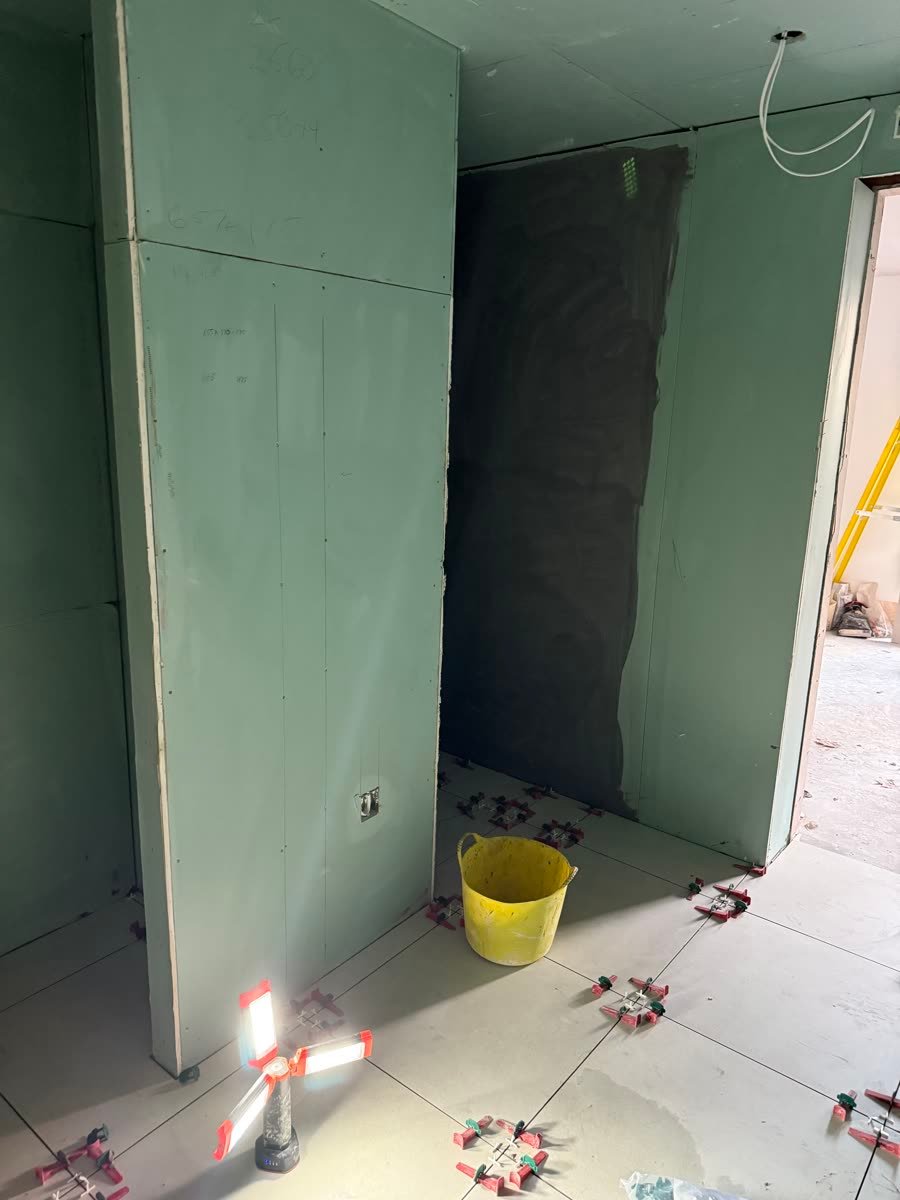
The Real Timescales
A standard bathroom retile typically runs 2 to 3 weeks from strip-out to finished grout, covering everything from removing the old bathroom through waterproofing, tiling, and the curing time at the end. A kitchen splashback, by contrast, is often a 1 to 2 day job once materials are on site, because there's no waterproofing stage and usually a much smaller area involved. A full kitchen floor or a feature wall sits in between those two, typically taking 3 to 5 days depending on size and how much prep the existing floor or wall needs before tiling can start. These aren't rough guesses. They're the timescales we actually work to and quote against, because a client planning around a bathroom being out of action for a fortnight versus three days is a very different conversation, and it's one we'd rather have accurately upfront than adjust halfway through the job.
Why Bathrooms Take Longer Than Kitchens
The biggest single reason is waterproofing. A bathroom that's a wet room or has a shower enclosure needs tanking applied and properly cured before tiling starts, and that's simply time that has to pass, it's not a stage that can be rushed by working faster. Then, once tiling's finished, grout typically needs 24 to 48 hours to cure before regular water contact, and sealant needs a similar window before it's genuinely waterproof, both of which happen at the end of the job when it's tempting to think everything's basically done. A kitchen splashback or floor has none of this built in, because it's not routinely sitting in direct water contact the way a shower or bath surround is. None of these waiting periods involve anyone actively working, they're curing time, not labour time, but they're real days on the calendar all the same.
Already sure this is the job you want done properly? Call us directly, no need to read on.
What Actually Extends a Timeline
Beyond the baseline, a few things genuinely add time. How much strip-out and prep is needed matters a lot. Removing old tiling, checking and correcting an uneven subfloor, or dealing with damp or movement issues found once the old surface comes off all take longer than a straightforward retile of an already-sound room. Layout complexity is another real factor: a herringbone pattern, a mosaic feature, or anything with a lot of cuts and careful setting-out takes noticeably longer to fit well than a standard grid layout in the same size room, because the extra time is in the planning and precision, not just the physical fixing. Room size plays a part too, obviously, but it's rarely the biggest factor. A small, complicated wet room can easily take longer than a larger, simple bathroom with a straightforward layout.
Why a Real Date Beats a Vague Range
A fitter who gives you an actual date, rather than "two to three weeks or so," has thought through the specific job in front of them: the prep it needs, the curing time it can't skip, and the layout that's been agreed. That matters most on a full renovation, where tiling is one trade among several and everyone else's schedule depends on knowing when it'll actually be done. About 90% of our work comes through builders managing a renovation rather than direct from homeowners, and in that setting, a vague estimate isn't just unhelpful, it holds up plasterers, plumbers, and electricians who all need to know when their slot starts. We book jobs in within around two weeks of a confirmed quote and work to the date we've given.
If you're planning a renovation and need tiling to fit around other trades without becoming the hold-up, get in touch for a free site visit. We'll give you a real date, not a range. See our Floor & Wall Tiling page for how we approach this on a real job. Or get a free quote if you already know what you need.
Frequently asked
Questions worth answering upfront.
Mostly because of waterproofing and curing time, not the tiling itself. A wet room or shower needs tanking applied and cured before tiling, and grout and sealant both need 24-48 hours to cure afterwards, none of which applies to a kitchen splashback.
Some of the schedule is genuinely fixed, particularly curing times, since those aren't about working faster, they're about materials setting properly. What can sometimes be adjusted is when the job starts, which is why booking early helps.
Yes, noticeably. The extra time is mostly in the setting-out and the precision needed for all the extra cuts, not in physically laying more tiles, so it's worth factoring in if you've got your heart set on a pattern layout.
After anything that could damage or dirty a finished tiled surface, such as first-fix electrics and plumbing, plastering, and any underfloor heating installation, but before final-fit items like sanitaryware that get fitted onto or around the tiling.