
Herringbone Tile: The Complete Guide
Herringbone is the single most-asked-about tile pattern we get, and for good reason. It's a genuinely striking look that turns an ordinary floor or wall into a feature in its own right. It's also one of the most misunderstood patterns out there, with plenty of confusion around what it actually is, why it costs more, and how it differs from chevron. Here's the real detail.
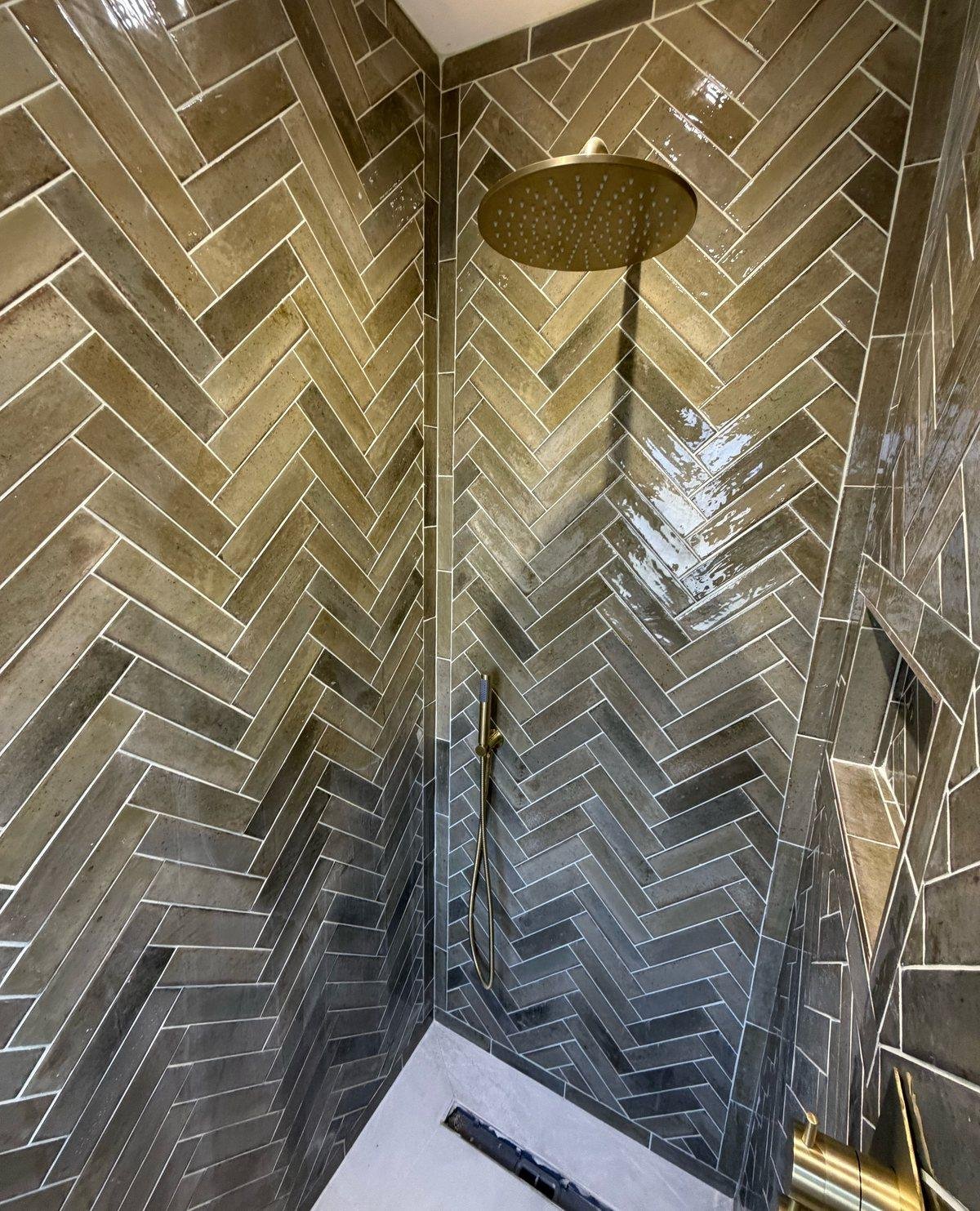
What a Herringbone Pattern Actually Is
Herringbone is laid using rectangular tiles, or planks, if it's a wood-look porcelain, arranged so each tile sits at a right angle to the ones next to it, with the short end of one tile butting against the long side of the next. The result is a repeating zigzag, a bit like the pattern on a herring's spine, which is where the name comes from. It's an old pattern, used in parquet flooring and brickwork long before it became a popular tile choice, and that history is part of why it still reads as a premium, deliberate look rather than a passing trend. Because every tile is a plain rectangle, herringbone doesn't need any special pre-cut shapes, it's the laying pattern that creates the effect, not the tile itself. That's part of what makes it accessible with almost any rectangular tile in porcelain, ceramic or natural stone, though the finish and format you choose changes the overall look significantly, from a tight, formal grid feel with a small tile to a bolder, more graphic effect with a longer plank format.
Why It Costs More to Fit Than a Standard Grid
A standard grid layout is the fastest, most efficient way to lay tiles, straight lines, minimal waste, predictable cuts along the edges of a room. Herringbone is the opposite of efficient by design. Every tile needs to be positioned at a precise angle relative to its neighbours, which takes more time to set out and check as you go than a straight run ever does. It also produces significantly more waste. Because the pattern runs at 90 degrees across the room, you get far more angled cuts at the edges and around any obstacles, door thresholds, pipework, cabinet edges, and many of those off-cuts can't be reused elsewhere in the pattern the way a straight cut often can be. On top of that, herringbone genuinely takes more skill to get right. Get the very first few tiles slightly out of true and the error compounds as the pattern runs across the room, becoming obvious rather than disappearing into a corner.
Chevron vs Herringbone: the Real Difference
These two get mixed up constantly, understandably, because they look related. Herringbone uses plain rectangular tiles laid at right angles to each other, which creates a zigzag with a visible step at each joint, the tile ends meet in an offset "L" shape rather than a flush point. Chevron uses tiles that are pre-cut at an angle, usually at each end, so that when they're laid, the ends meet flush and form a single continuous "V" or arrow shape running down the floor with no step or offset. It's a cleaner, more uniform line than herringbone, but it requires tiles manufactured or cut specifically for that angled edge, which narrows your material options and generally pushes the price up further than herringbone does, since standard rectangular stock won't do the job. If you've seen a photo online labelled "herringbone" that shows a perfectly flush, continuous zigzag with no visible step, there's a decent chance it's actually chevron.
Already sure this is the job you want done properly? Call us directly, no need to read on.
Which Rooms and Materials Suit It Best
Herringbone works well pretty much anywhere you'd fit a standard tile, but it earns its keep most in rooms where you want a floor to be a feature rather than a backdrop, hallways and entranceways, where it's often the first thing anyone sees, and bathrooms, where a herringbone floor in porcelain gives a genuinely upscale look without needing to touch the walls. Kitchens suit it too, particularly with a longer plank-format porcelain that reads more like a wood floor from a distance. It's worth thinking about scale in a kitchen, though, a very busy pattern in a smaller kitchen can visually crowd the room, where a hallway or larger bathroom has more space for the eye to appreciate the full effect. Porcelain is generally the most practical material choice for a herringbone floor, since it copes well with moisture and daily wear without any sealing. Natural stone herringbone looks excellent but brings the maintenance considerations of any natural stone floor on top of the extra fitting time the pattern itself already adds.
Bathrooms vs Kitchens vs Hallways: Practical Considerations
In a bathroom, herringbone flooring needs the same full wet-room tanking underneath as any other bathroom floor, the pattern doesn't change the waterproofing requirement, it just adds time to the tiling stage on top of it. In a kitchen, if you're running underfloor heating, herringbone can still be fitted over heating mats correctly, but the extra cuts and angled tiles mean a bit more care is needed to avoid damaging the mat during fitting than with a simple grid layout. In a hallway, herringbone is often the easiest of the three to justify, since hallway floors are usually a simpler run without the wet-area waterproofing or heating elements to work around, and it's exactly the kind of space where a striking floor pattern gets seen and appreciated daily without the practical complications of a wet room.
Herringbone is one of the most rewarding patterns to get right, and one of the most obvious to get wrong if it's rushed. We fit herringbone in porcelain and natural stone across bathrooms, kitchens and hallways throughout Cheshire and Greater Manchester, most of it as part of a wider renovation project alongside the builders managing the job. See our Floor & Wall Tiling page for how we approach this on a real job. Or get a free quote if you already know what you need.
Frequently asked
Questions worth answering upfront.
More time to set out and check as you go, more wastage from angled cuts around edges and obstacles, and more skill needed to keep the pattern true across the whole floor. All three add to the job compared with a straight grid.
Herringbone uses plain rectangular tiles laid at right angles, creating a visible step at each joint. Chevron uses tiles pre-cut at an angle so the ends meet flush in a continuous V shape with no step. They're often confused in photos online.
It can be, but scale matters, a busy zigzag pattern in a very small space can feel crowded. A longer plank format or slightly larger tile often reads better in a smaller room than a tight, small-format herringbone.
Yes, it can be fitted correctly over heating mats, the same as any other tile layout. It just needs a bit more care during fitting because of the extra cuts and angled tiles involved.