
Coordinating Tiling With Other Trades During a Renovation
Tiling rarely happens in isolation on a renovation. It sits in a sequence alongside plumbers, electricians, kitchen fitters and sometimes an underfloor heating installer, and where it falls in that sequence matters just as much as the tiling itself. Most of our work comes through builders managing exactly this kind of multi-trade project, and a lot of what makes a renovation run smoothly, or not, comes down to how well that sequencing is handled.
Where Tiling Actually Sits in the Sequence
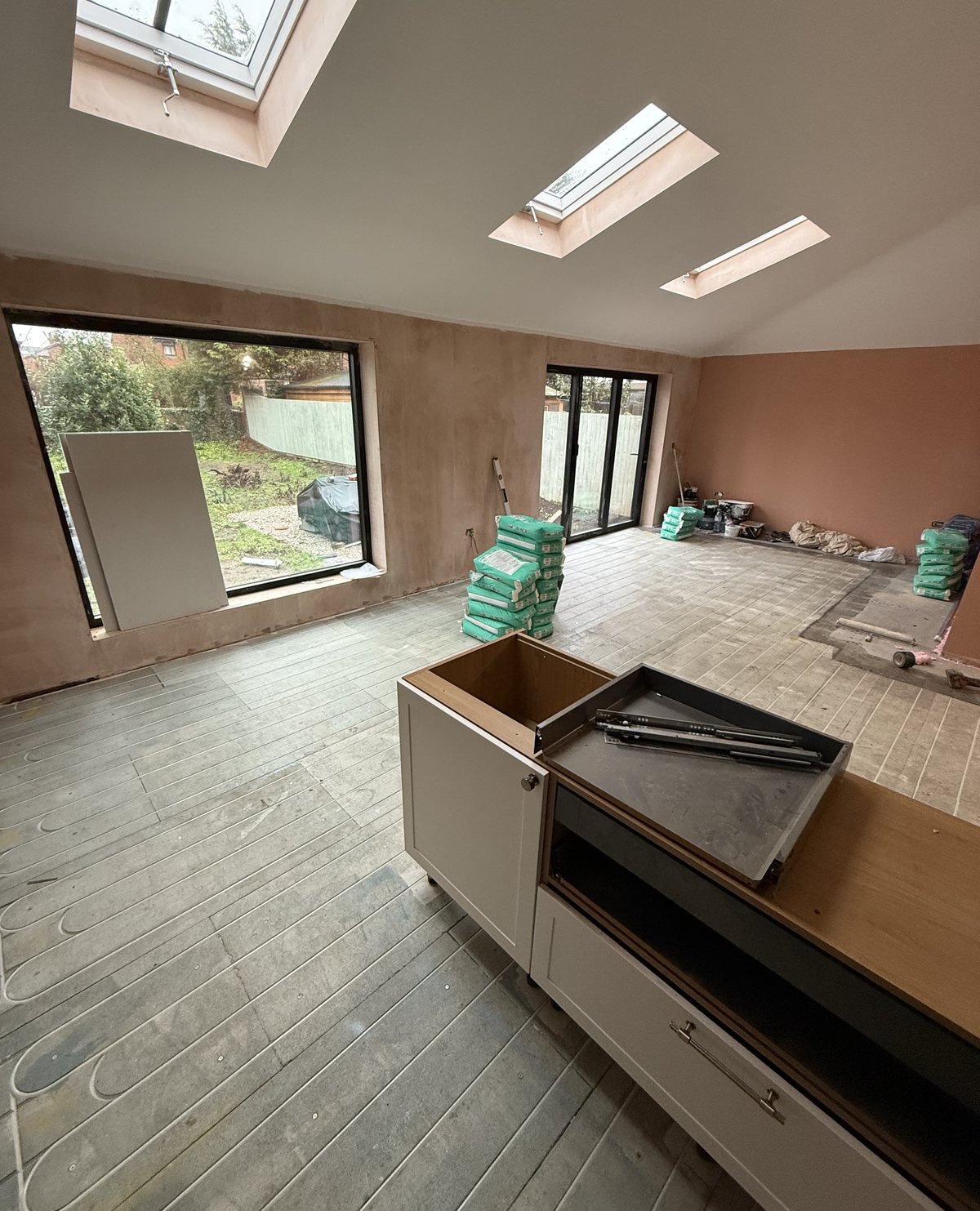
Tiling generally happens after first-fix plumbing and electrics are done, pipework and cabling in place, but before the final fittings go on, and it's often installed after, or alongside, underfloor heating, which is fitted by a separate trade before tiling can take place over the top of it. In a kitchen specifically, timing depends on what's being tiled: floor tiling is generally coordinated with the kitchen fitter so it happens once cabinets are in place, and splashback tiling behind a run of units typically comes after the worktop template or fit, so it's cut and positioned against the actual worktop rather than a plan drawing. Get this order wrong and you end up tiling around gaps that should have been filled first, or tiling too early and having to work around units and worktops installed afterwards.
What Happens When the Sequence Slips
This is the honest, unglamorous reality of any multi-trade renovation: if one trade runs late, it pushes everyone scheduled after it. If first-fix plumbing overruns, or an underfloor heating install takes longer than planned, tiling can't start on the date it was pencilled in for, and that knock-on effect doesn't stop at tiling either: whatever's meant to follow tiling shifts too. It's rarely anyone's fault specifically; renovations involve enough moving parts that some slippage is close to inevitable. What matters is how it's handled: being told early that a date's moving, rather than finding out on the day, is the difference between a manageable delay and a genuinely disruptive one.
Already sure this is the job you want done properly? Call us directly, no need to read on.
Why a Single Point of Contact for All Tiling Helps
On a multi-room renovation, say a full house needing a kitchen, two bathrooms and hallway floors all tiled, having one tiler responsible for all of it, rather than coordinating several different trades or subcontractors for each room, removes a layer of scheduling risk. It means one person managing when tiling happens across the whole job, communicating directly with the builder about how it fits around everyone else, rather than a builder having to chase multiple separate schedules and hope they line up. This is a genuinely practical reason builders managing renovations tend to prefer keeping tiling as a single point of contact rather than splitting it room by room.
Practical Advice If You're Managing Your Own Renovation
If you're project-managing your own renovation without a main contractor doing it for you, a few things help keep tiling on track. Confirm with your tiler roughly what stage the room needs to be at before they can start (first-fix complete, underfloor heating in and tested, subfloor ready) rather than assuming a date will simply work. Build in some flexibility around trades that are more prone to running over, particularly anything involving groundwork or heating systems. And communicate delays as soon as you know about them rather than waiting to see if they resolve themselves: a tiler who knows a date has slipped a week in advance can usually absorb that far more easily than one who turns up to a room that isn't ready.
Getting tiling sequenced correctly against everyone else on site is as much a scheduling skill as a tiling one, and it's something we manage as standard across full renovations. If you're planning a full house renovation and want tiling handled as one coordinated part of the project rather than a separate headache, it's worth reading more about how we approach that. See our Floor & Wall Tiling page for how we approach this on a real job. Or get a free quote if you already know what you need.
Frequently asked
Questions worth answering upfront.
As much as possible, but even a few days' notice makes a real difference to rearranging around it. The earlier a slip is flagged, the easier it is to manage without a knock-on delay to the room itself.
Underfloor heating is installed by a separate trade before tiling happens over the top, and it's standard practice to have it checked and working before tiling begins, since problems are far easier to sort before tiles are down than after.
It depends on what's being tiled: floor tiling is usually done once units are in place, while splashback tiling behind the units is typically done after the worktop is templated or fitted, so it can be cut precisely to the actual worktop rather than a plan.
Jobs are typically booked in within around two weeks of a confirmed quote, but it's worth having that conversation early in your planning, once you have a realistic sense of when first-fix work and any underfloor heating will actually be finished.